
Sideshow returns to the source on 'Tigray Funk," bringing Hip-Hop back to Africa
It's hip-hop's long awaited anti-colonial, Pan-African album.
“I will die standing up for God…”
“Ok, has God ever told you to let this white man rule you like he is?”
“Well young man, you first must be born again, God is a spirit-”
“Nah I aint born again- I aint GOT to be born again. See I was born in a new generation.
Your mother could’ve brainwashed you, but can’t nobody brainwash me.
I’m ready. It’s gon take the young boys like us to win the revolution”…
“I will die standing up for God…”
“Ok, has God ever told you to let this white man rule you like he is?”
“Well young man, you first must be born again, God is a spirit-”
“Nah I aint born again- I aint GOT to be born again. See I was born in a new generation.
Your mother could’ve brainwashed you, but can’t nobody brainwash me.
I’m ready. It’s gon take the young boys like us to win the revolution”…
is the soundbite that opens Tigray-born, and D.C.-raised rapper, Sideshow’s tenth studio project “Tigray Funk.” It’s the start of a four-disc hour-long dialogue that Sideshow holds with the past, through signs and symbols, to find an African understanding of self to answer the conditions plaguing Africans today.
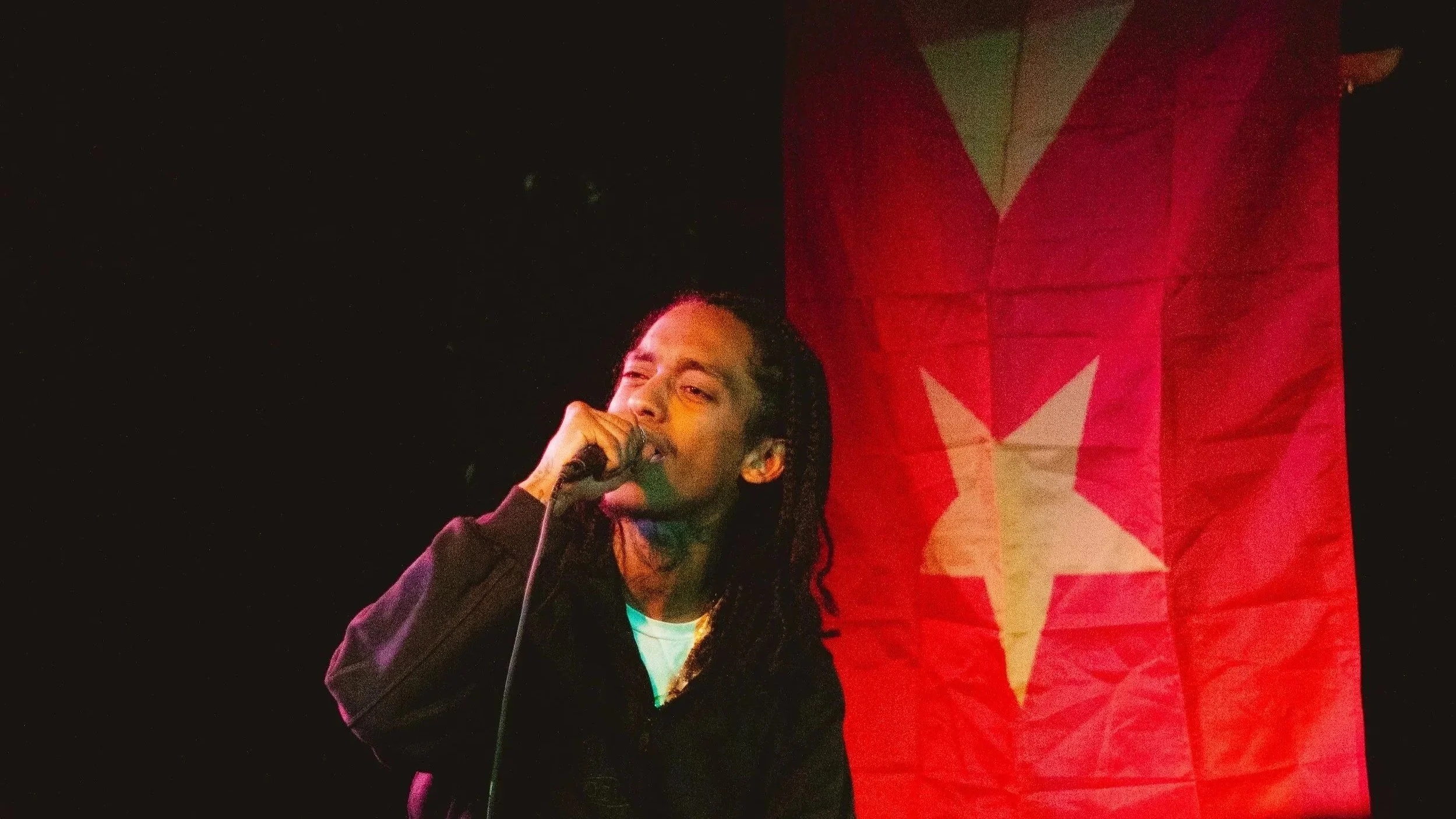
Sideshow April 2025 in DC by Elijah
Sideshow was born in Tigray, a region in Eastern Africa struggling for liberation and ethnic sovereignty from the Ethiopian Government. The government has employed war crimes, U.S. assistance, and Western Europe’s assistance to exact genocide against the Tigray people for deferring from the Ethiopian Government’s nationalist interest of a monolithic identity. That genocide has been characterized by murder, famine, and most recently an economic blockade which has deteriorated the region.
Thanks for reading! Subscribe for free to receive new posts and support my work.
On Tigray Funk, Sideshow returns hip-hop and her people back to their collective source of knowledge and understanding: Africa; as he returns to his source: Tigray.
Sideshow uses the Five Percent framework, an extension of ancient African knowledge systems, to complete the return. His conversations, upon repeated study, return African people to a fundamentally African understanding of self. For Sideshow, and the culture of the Five Percenters (the Nation of Gods and Earths), the return to African understanding of self is understood as the “Cipher.”
The Five Percent culture defines the Cipher as “a circle consisting of 360 degrees: 120 degrees of knowledge, 120 degrees of wisdom, and 120 degrees of understanding all born to life,” according to The Supreme Lessons of The Gods and Earths compiled by God Supreme Allah.
Tigray Funk is not Sideshow’s first time dealing with the “Cipher” as a system of African knowledge. On his first album, Farley, he raps about the Cipher on 01’BeigeCamry, “A hundred twenty degrees in threes work all angles.”
When I met him at his DC tour stop for Tigray Funk, he revealed to me the image of the “Cipher” tattooed on his arm, where a “7,” is encased by a triangle with “120” on each angle, which is then encased by a larger circle.
The image and concept of the Cipher has its origins in ancient African knowledge and spiritual systems like the Bakongo Cosmogram, the Kemetic Worldview, and original Moorish science which introduced the “0” to Europe.
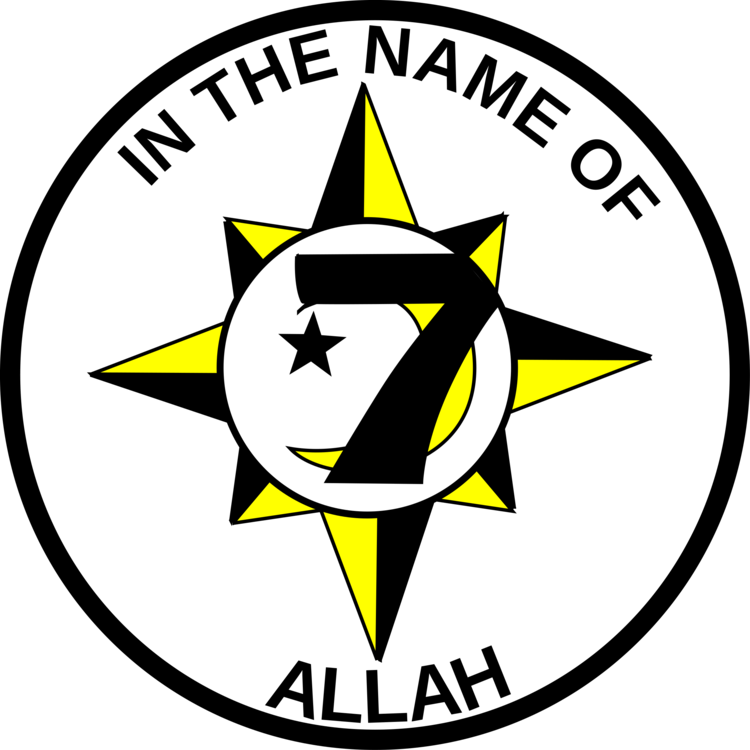
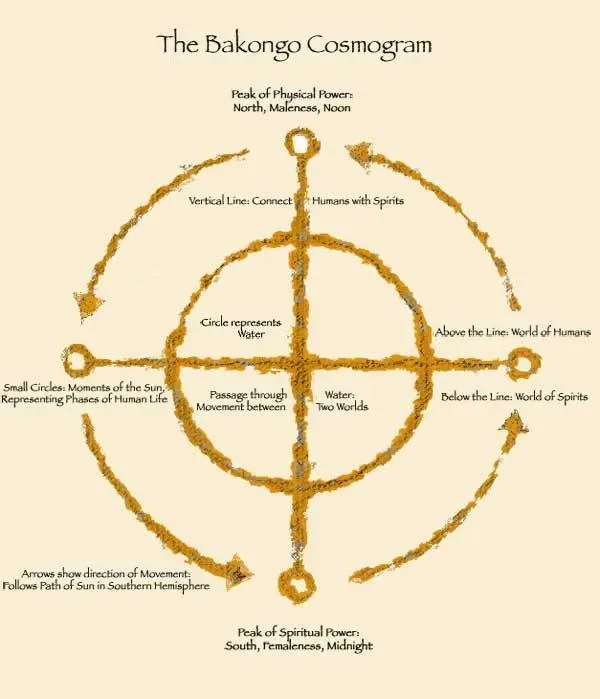
Left: NGE Cipher. Right: Bakongo Cosmogram
The connecting thread between these African knowledge systems is their understanding of the universe as a circle, comprised of a dialogue between life and death, held through symbols in nature, that when studied, reveal the African knowledge of self that prepares us for liberation and cohesive movement.
These African systems of understanding the self and the world developed with Africans wherever they were forced to understand the world. In Jamaica with Rastafarianism, in Brazil with Candomblé, in Cuba with Santeria, and in America with Prince Hall Freemasonry, Moorish Science, the Nation of Islam, and eventually the Nation of Gods and Earths.
The Nation of Gods and Earths developed the Supreme Mathematics as a system for the cultural production of African knowledge and understanding. The mathematics, like the languages that precede it, uses a series of symbols to reveal its messages.
At the time of their founding, African revolutionaries like Kwame Ture were stressing the importance of Africans in America identifying as Africans during the time of the Five Percenters formation. In the 90s he said,
The enemy must stop us from getting to “African.” All African revolutionaries know that the culture of revolution is the most important revolution in Africa because a people without a culture have no cohesive force and cannot wage a proper struggle.
And if the people are depending upon the culture of the enemy they are finished. Thus the enemy uses our culture against us!
By putting those messages in hip-hop from the start, the Five Percenters intended to present Africans with a revolutionary culture. Along the way, in the mid-90s, the enemy industrialized the culture, glorifying what was otherwise intellectualized: drugs, misogyny, individualism, and intracommunity violence.
Unlike most African rappers today, Sideshow is abundantly aware of how the enemy has come to use the culture against his people, because he wears the very scars of that weaponization. He raps about his drug usage, misogyny, individualism, and intercommunal violence, as being a part of the ills produced by colonial domination.
Behind these ills, lie Sideshow, a symbol of the conflicted and bewildered African who understands only that he is African and that his mission is to defeat the colonist. He finds and reveals this mission through the cyclical dialogue with the past that he presents through the signs and symbols of the “Cipher” which he laced throughout the album. He says as much on his first track, Signs and Symbols (feat. SEXWORKS)
“More of it, more opi-codeine, my obsession.
I’m blesssed with a keen eye, I spot ‘ em in a second
Signs and symbols meant for those that recognize their presence
And I recognize their presence and their presents.”
He identifies here that signs and symbols are only for those that recognize them. This is an integral aspect of the culture of the Nation of Gods and Earths. Another central belief is that 85% of the world is being intentionally led by an evil 10%, and it is up to the 5% to reveal the truth for liberation. This is Sideshow identifying himself as a part of that 5% who recognizes the symbols needed to signal liberation.
The NGE were founded in 1964 as a self-identity resistance movement at the intersection of the global historical and political forces that precipitated the U.S. government’s and Western Europe’s Neo-colonial siege on the African world.
Its founder, Clarence 13X, was taught by El Hajj Malik El Shabazz (Malcolm X) when they were both apart of the Nation of Islam. The NOI was developed out of the thought of an even earlier self-identity resistance movement, the Moorish Science Temple (MSTA) founded by Noble Drew Ali in the early 1920s. That was the first movement in the United States to reject an American identity for an Islamic one alongside the history of the Moors of ancient Northern Africa.
(This is not to give credit to any one thought, culture, or practice as better or worse than the other, merely to understand their commonalities)
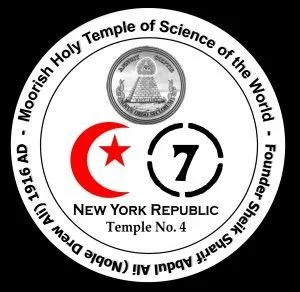
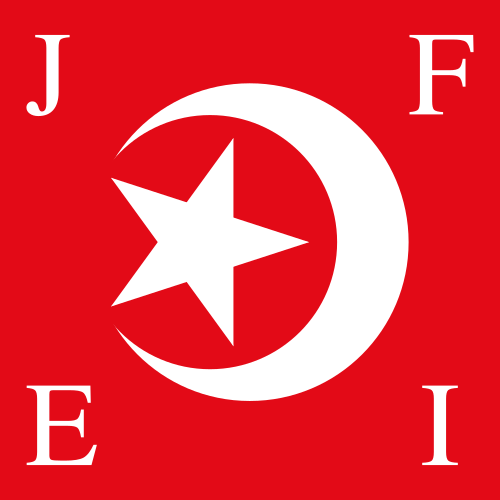
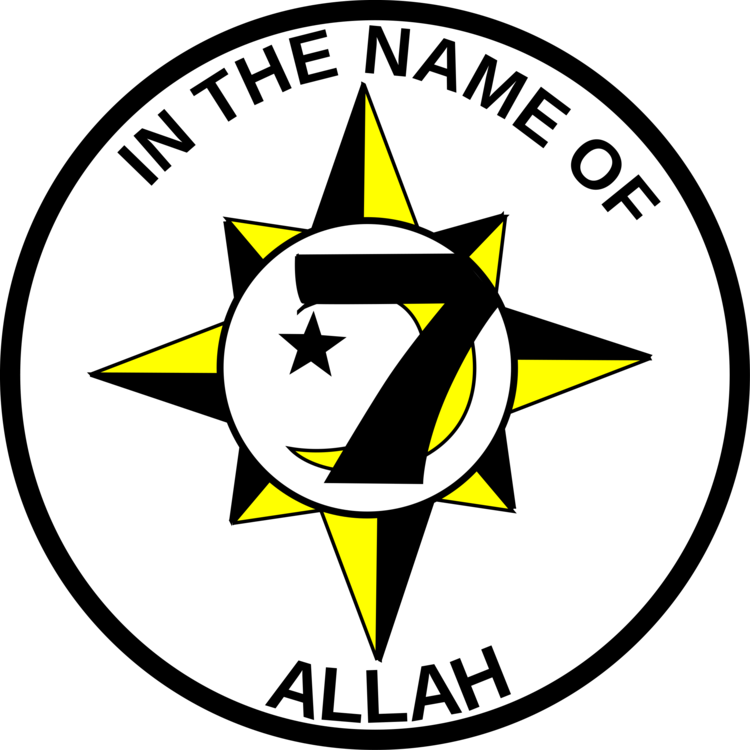
From left: MSTA, NOI, and NGE
The NGE differed themselves from their predecessors by allowing otherwise prohibited acts like smoking weed, premarital sex, and crime in their practice because they believed that during the 70s and 80s, those became the people who needed the knowledge of self for liberation the most.
And Sideshow proudly raps about his own drug usage, among other “vices,” on the album. It is Sideshow recognizing himself as being apart of the colonized, as opposed to trying to separate himself from them. Viewing yourself alongside the colonized — the people — is an original trait of hip-hop that was carefully extracted by record labels and the industry over the last 30 years.
It was then replaced with rampant individualism and ego for two generations of young Black people, especially men, to consume. The dual relationship of understanding oneself to be inextricably tied to the African collective, while also desiring to be an individual, creates a sort of mental tug-of-war for Sideshow.
His ego runs rampant, only grounded by Tigray’s struggle on the first few songs of the album, KILL FROM THE HEART, VOLUME METRIC, I AM DA CAPTAIN, and MY CHEMICAL ROMANCE (FT. KELOW LATESHA). These songs are characterized by soundscape building loops, rough edged production (p-pops on I Am Da Captain), and mind-bending double entendres for drugs and love.
It isn’t until MARTYR MOST HIGH, the 7th track, that Sideshow lets the listener in on his internal conflict: to be for the collective or individual.
No Savage, shoot you right in the mall
Right in your face, right out the gate with JamalMy word from God, disagree, that’s word to Jihad
My mother tell me, “Take a look up to God”My bro a killer, where the fuck did he go?
My sin is my pride and my fuckin’ ego
I need a damn brick, treat me like Deebo
Hit me, Craig, with that shit, need it for the free, thoughUh, make me wanna cry
For us to progress, so many have to die
For the story to be told, so many gotta go
I yearn to know less, I learn to let go
No Savage is a D.C. based rapper who was incarcerated in 2023 for shooting inside of a major Virginia shopping mall. Sideshow uses No Savage as both a symbol for the ego of African youth, and as a mirror for his own crimes under colonialism.
Here, the Friday reference becomes another conversation with the past. Where most rappers see the Friday “Craig vs. Deebo” fight scene as a reflection of their individual overcomings, Sideshow sees it as an opportunity for his ego to be struck for the benefit of the collective’s liberation.
It’s that same ego that fuels his murder, his misogyny, his ableism, his drug usage, it’s all of his ills in conversation with past violence to be understood as obstacles towards his freedom. And he’s asking for it to be struck.
He finishes the song back home on a different beat, but it’s intentionally unclear if home is in Tigray or D.C. "
'Cause where we from, ain't much shit given
They got programs for kids, got programs for women
But everybody where I'm off drugs and trippin'The babies got— uh, babies tryna rob somebody, uh
They ain't never ever met nobody that gave a fuck 'bout 'em neither, I ain't either
Where we from, we don't trust white people
Africa
It’s in Tigray, D.C. and all other colonized communities where the colonizer will both set up programs for women and children, and facilitate drug addiction in the colony.
It’s in Tigray, D.C. and all other colonized communities where young people are struggling and engaging in crime yet nobody cares.
And it’s in Tigray, D.C. and all other deeply African communities where white people are universally untrusted.
HEART 2 A FEATHER is another masterpiece of a song that invites Sideshow to do more reflecting on his struggle between collectivism and ego before emerging anew on Disc 2 with the 9th track, 3EEP IT 2OGETHER (Ft. El Cousteau).
El Cousteau and Sideshow are frequent collaborators and are from the same city, D.C. I saw El Cousteau perform for the first time in 2023 in Baltimore, when Sideshow brought him out as an opener for his own opening set for MIKE. Yes, a guest on an opening set. I caught up with El Cousteau in Dec. 2026 on his first solo tour stop in D.C. to ask him about it, and he said that Sideshow asked him to come out to this random show in Baltimore for one song and introduced him to MIKE for the first time which has launched El Cousteau and his team.
The exchange gave this collectivist lyric from the song that much more depth.
Only time my hand out, is to help my man’s up.
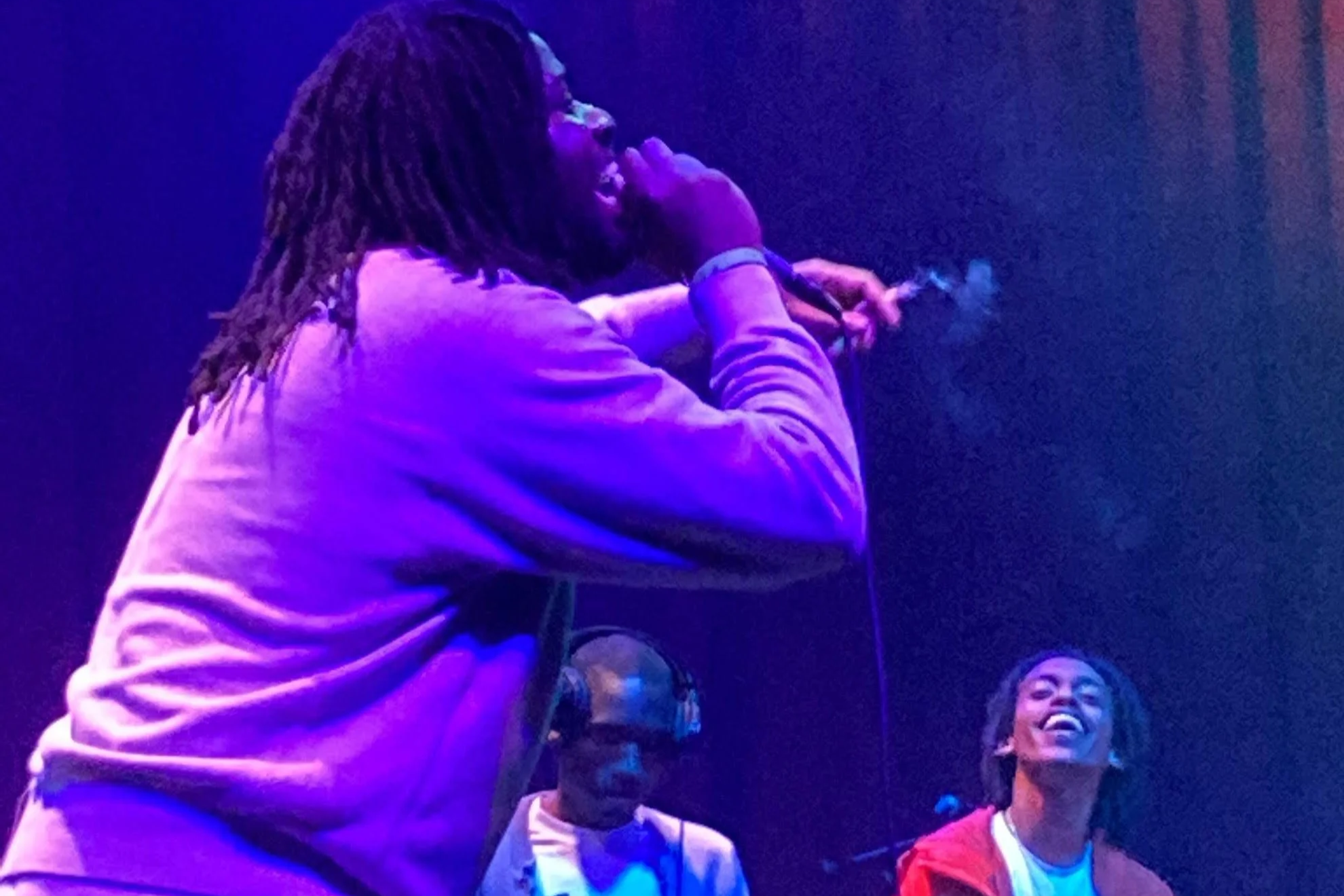
MIKE, TAKA, and Sideshow May 2022 at the Fillmore opening for Freddie Gibbs by Elijah
You don’t get that same type of camaraderie on Track 11, LIFES AS VIOLENT AS YOU MAKE IT, though, and there’s not much time to prepare. It’s the erratic, darting mind of a colonized solider at war. It’s here that Sideshow is angry, misogynistic, and egotistic all over again. He ends the track rapping about the meaning of life as understood mathematically by the Nation of Gods and Earths.
I'm leavin' downtown, two miles a minute
I'm doin' one-twenty, westbound on the 10
The tradition of encoding Five Percent knowledge into hip-hop that he’s calling on, is practiced far before him by prominent rappers and groups like Nas, Digable Planets, and Mobb Deep. This gives Sideshow’s album another degree of knowledge for its conversation with the past.
On Track 15, CCP LIKE OTO, he understands his drug use and violence as the drug use and violence of his predecessors: as conditions of war. This is a crucial vehicle for Sideshow to contextualize the habitual drug use and violence of youth today.
Only time I crack a smile, I’m high like James Brown
But when I'm in that field, keep Glocks concealed 'cause I'm a soldier
I thought I told you, when you old, this shit get older
This life a war, I play my part, I'm just a soldier
The latter part of this verse serves to place his perspective of being a soldier, in the context of Tigray and within the context of the West. It’s a reinterpretation of Rastafarian over-standings of the African soldier in Babylon (Sugar Minott, Bob Marley).
His words are also nearly verbatim what Black Panther Defense Minister, Geronimo Ji Jaga Pratt, said in 1997 : “This is me and this is truth, I’m a member, I’m a soldier in the ranks for our people.” It’s a common mantra for African militant resistance movements.
On YARDBIRD, track 16, Sideshow again converses with the past, but this time for his relationship to drugs. He again relates his drug usage to the drug usage of his musical predecessors (jazz before rap).
If it was '72, probably would've had brown on that spoon
Probably'd be a jazz player, Charlie Parker, sort of
My cut from Muddy Water and my Percs Chicago blue
Favorite music made off heroin and starin' at computers
It is his understanding that the only thing separating him from a 50 year old reality, is the 50 years.
It’s as Askari X, in Outro by the Delinquents, rapped: “for reality changed, everything takes on renewals, nothing stays the same.” He, too, called on NGE frameworks but this time from Oakland where he emerged out of the cultural remains of the Black Panthers to continue the call for the liberation and collectivism of Africans.
As the material reality has changed from jazz to hip-hop, it is but a mere renewal. And the enemy’s method for using the culture against the people took on a renewal as well.
Nonetheless, like African jazz musicians in the U.S., Sideshow retains his understanding of his duty being the continuation of African thought and thus African resistance. On ALENA(ኣለና)PARADISE LOST, he builds on the grounding from Yardbird by using an Ethiopian jazz-esque beat produced by Dubya.
In fact, throughout the album, many of the jazz-esque beats sound like they were recorded on the same equipment as a Mulatu Astatke, where the acoustics are ever so slightly unmastered giving it that much more of a raw sound. Yet another method to engage in conversation with the past.
On this song, Sideshow relates his experience to the past again, flexing his understanding of labor relations for Africans under colonialism. He relates the industry’s labels to slave masters offering bids, he talks about how crime is a tool of the rich to cage up the colonized poor, and then he wraps it with a soundbite exposing colonialism.
Treat these labels like a leg, can't keep they hands off me
Who the highest bidder, got the best offer?Rich get richer while the poor get they wage cut
Make us killers just so they can keep us caged upSKIT: It is written that a wise man was once asked, "What are the four principle products of Africa?"
And without hesitation, he replied
"Gold, ivory, diamonds, and blood"
Sideshow April 2025 in DC by Elijah
By this point Africa, Tigray, and anti-colonization are written all over the album. Over the next few songs we get his struggle with drug abuse and how it mars his focus on Tigray. But once we get to track 24, INVADER JIM, he turns his ego against colonialism and understands his drug usage, and other colonial vices, as being the fuel for understanding himself as a militant for his people in Tigray and America.
Say you was makin' money then, you ain't makin' money now?
Say you was fuckin' hoes back then, what you been doin' now?
I say I'm the biggest T, the biggest one alive
'Cause the biggest T's, they were join the army and went die for itI just pray for my chance to go and lay my life for it
I'm off tree mixed with UUV, bitch, I'm on flight modeThey only wan' be soldiers when it's safe to be soldier
To die my duty, it's a privilege to get old.
He ends Invader Jim with an excerpt from the Black horror movie Ganja and Hess. It’s a powerful song because it builds up to this very excerpt, Coca Cousteau’s production sounds like Sideshow is charging up for a beat drop that never comes. It perfectly encapsulates the loneliness and alienation that he nodded to before with reference to his peers.
To the Black male children Philosophy is a prison
It disregards the uncustomary things about you
The result of individual thought is accruable only to itself
There is a dreadful need in man to teachIt destroys the pure instinct to learn
The navigator learns from the stars The stars teach nothing
The sun opens the mind and sheds light on the flowers
The eyes shame the pages of any book
Gesture destroys concept
The quote continues into the last track of Disc 3, WRETCHED OF THE EARTH, which is where my only real conceptual critique of the album lies. To me, this song isn’t nearly as lyrically rich as the name calls for it to be. The book, Wretched of the Earth by Frantz Fanon, is easily the most radical and revolutionary text within the Pan-African canon. Fanon’s work in Wretched of the Earth influenced the Pan-African thought of nearly every African revolutionary so much so that he was revered by his peers and successors like Malcolm X, Walter Rodney, and Kwame Ture.
Fanon makes the central argument in his book that the “wretched of the earth” — those most deeply affected by colonization — are the ones most ready for revolution and thus the revolutionary must identify and ground their understanding in them.
The nationalist militant who decided to put his fate in the hands of the peasant masses, instead of playing hide-and-seek with the police in the urban centers, will never regret it. Pg 78
Gone are the cafes, the discussions about the coming elections or the cruelty of such and such a police officer. Their ears hear the true voice of the country and their eyes see the great and infinite mystery of the people. They realize that precious time has been wasted on futile discussion about the colonial regime. Pg 79
They realize at last that change does not mean reform, that change does not mean improvement. Now possessed with a kind of vertigo they realize that political unrest in the towns will always be powerless to change and overthrow the colonial regime. Pg 79
They discover that the rural masses have never ceased to pose the problem of their liberation in terms of violence, of taking back the land from the foreigners, in terms of national struggle and armed revolt. Pg 79
This is the exact theoretical articulation for what the NGE, and Sideshow, are attempting to do, connect revolution to the most oppressed of us. It is the theoretical articulation for what all African resistance movements should be trying to do: to place their understanding and analysis in the most oppressed of us to liberate all of us. Like Fanon, the NGE view the young as the harbingers of this very revolution.
Thematically and theoretically, Tigray Funk is a musical embodiment of the Wretched of the Earth. But Sideshow misses the opportunity to connect the realities and instead relies on excerpts to do the work.
It seems like to an extent he knew the song would not be the most revolutionary song, because after it we get track 29, LOOK WHAT OUR STOMACHS MADE US DO, where he gives us the most radical bars of the album, and possibly the most radical of hip-hop.
I got hot nines for settlers tryna get my home back
From Tigray to Palestine, we facin' cold facts
If you not white with blue eyes, your suffering don't matter
They tryna wipe us out, they scared we gon' surpass 'em
We witness gеnocide and pray, I swear we movin' backwardsI take a trip down memory lane, shit look better looking back
But I know my mind's eye deceptive when it comes to things that passedYou know Mr. T be moody, man, they thought I'm from the D
But really I'm from the V, but really I— really I'm from the T
No, really I'm from the— uh, it's none to show some love, in fact, it's free
For the colonized, memory is the most valuable commodity. When the colonized forget, they can be made to do anything because they do not remember what they’ve gone through. When they remember, like Sideshow acknowledges, everything would go crazy because of how violent their past has been under colonialism.
Then, he connects that memory across the world by naming the places he’s from or the places other Africans are based like, Detroit, the DMV, and Tigray. It’s here that Sideshow is linking the experiences and memories of Africans across the world through himself. He is the vehicle for ancestral mediation and knowledge, the vehicle for Pan-Africanism.
On International Soda Club we get a peaceful and beautiful reggae dub-style song that also resembles Ethiopian Jazz. El Cousteau, Sideshow later revealed online, played the guitar on this track.
The last song, CHAOS CONSTANT, is his victory lap. It’s where he recenters African revolutionary militarism, Tigray, and a double entendre cementing his own Pan-African connectivity.
I'm smoking all day, I'm locked in with the mollies(Marleys) and the follies (Farleys)…
…I roll a strong J, forget what I was mad about
You on the wrong plane, complain until the pilot drop us off
I came a long way, can't forget where I started at
I had to T-side my belt, made it an artifact
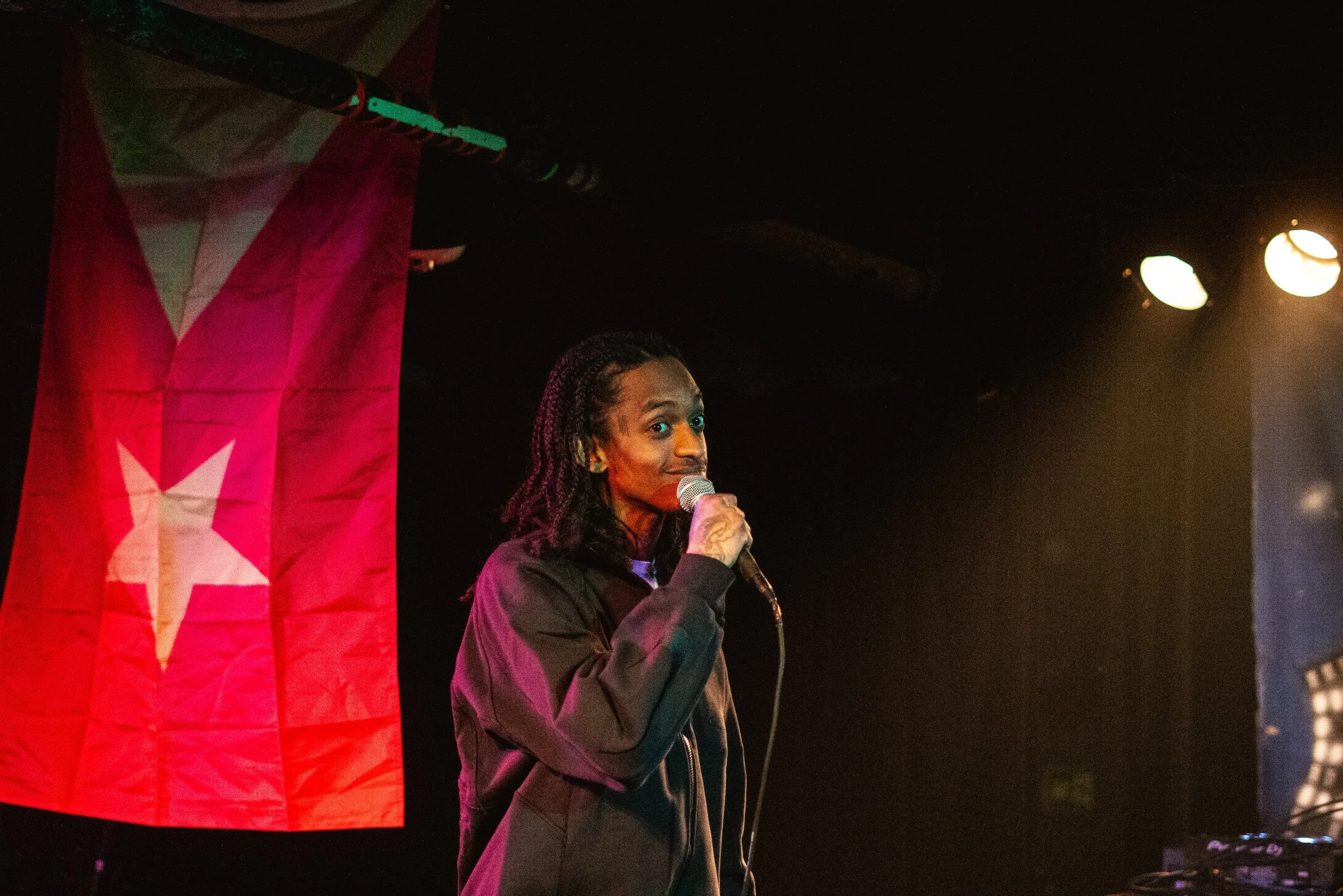
Sideshow April 2025 in DC by Elijah